

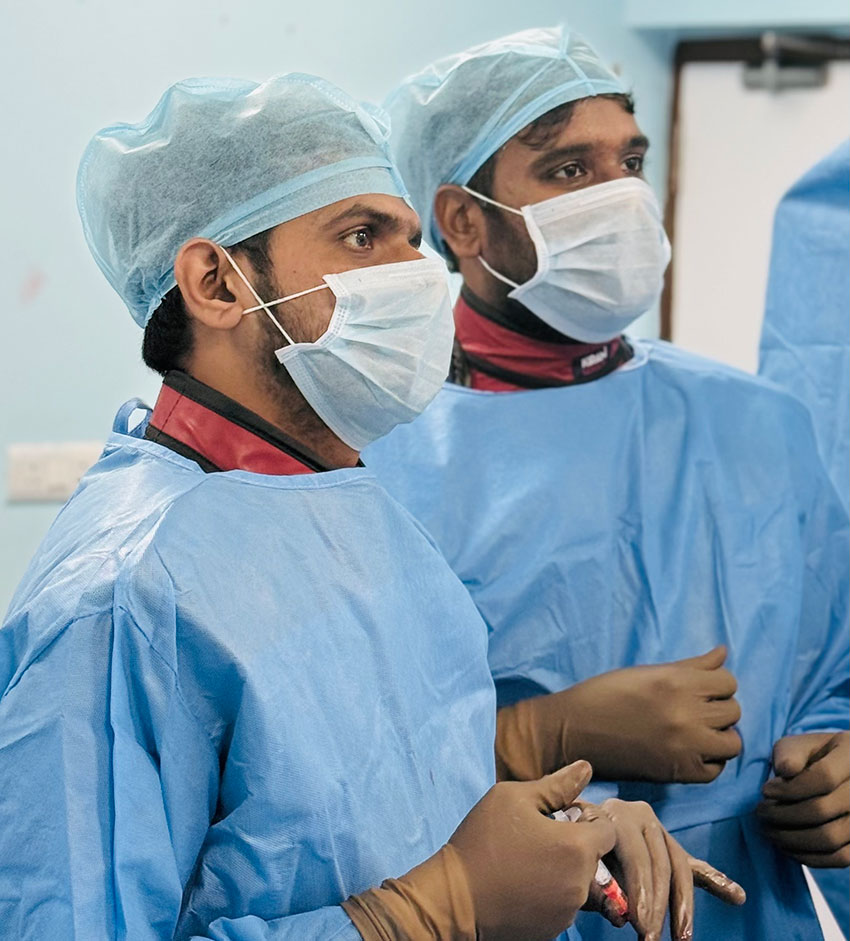
Who is an Interventional Radiologist?

Our Guiding Principle

The guiding principle of interventional radiology is simple yet powerful. Many conditions that traditionally required surgery can now be treated without large cuts, prolonged hospital stays, or long recovery periods. By using advanced imaging to see inside the body in real time, an interventional radiologist treats the problem precisely while minimizing trauma to healthy tissues. The goal is always effective treatment with maximum comfort and clarity for the patient.

What Does an Interventional Radiologist Do?

An interventional radiologist uses imaging technologies such as ultrasound, CT scans, and fluoroscopy to diagnose and treat disease from within the body. Instead of large incisions, treatment is performed through a tiny needle or catheter placed through the skin. This allows accurate access to deep or complex areas of the body that would otherwise require major surgery, while maintaining a high level of safety and control.

Understanding Minimally Invasive Image-Guided Procedures

MIIPs are treatments performed using real-time medical imaging such as ultrasound, CT scans, or fluoroscopy to precisely guide instruments inside the body. Instead of large incisions, these procedures are carried out through a small needle or catheter, allowing targeted treatment of the affected area. Because the approach is highly accurate and controlled, surrounding healthy tissues remain largely unaffected, resulting in safer outcomes and faster recovery.

Our Care Philosophy

At the heart of interventional radiology is honest, patient-first decision-making. Every patient is carefully evaluated with existing reports, scans, and medical history before recommending any procedure. An interventional radiologist does not rush into treatment but focuses on explaining all available options clearly, including whether a minimally invasive approach is appropriate or not. The emphasis is always on transparency, trust, and ethical care.

How Care Works with an Interventional Radiologist

Care begins with an appointment-only consultation designed to give patients time, attention, and clarity. Imaging is reviewed in detail, the condition is explained in simple language, and expectations are discussed openly. If a minimally invasive image-guided procedure is advised, it is planned with precision and performed in a controlled environment. Recovery is usually quick, with many patients returning home the same day or after a short observation period.

Our Promise to You

We promise to treat you as a person, not just a diagnosis. An interventional radiologist’s role is to guide you with clarity, respect your concerns, and recommend treatment only when it truly serves your best interest. The focus is always on delivering precise, minimally invasive care that restores comfort, confidence, and quality of life without unnecessary surgical burden.

Why Patients Are Referred to an Interventional Radiologist

Patients are referred to an interventional radiologist when they need clear, expert guidance on treatment options that go beyond traditional surgery. The focus is on understanding the condition in depth and identifying safe, minimally invasive, image-guided solutions that reduce pain, risk, and recovery time while prioritizing long-term patient well-being.
Icon

To Explore Non-Surgical Treatment Options

Patients are often referred when they want to avoid major surgery and understand whether a minimally invasive, image-guided treatment can safely and effectively address their condition.

Icon

When Surgery Feels High-Risk or Unnecessary

Elderly patients or those with existing medical conditions are referred to evaluate treatments that place less strain on the body and reduce surgical and anesthesia-related risks.

Icon

For Precise, Targeted Treatment with Faster Recovery

Interventional radiologists treat conditions from within the body using imaging guidance, allowing accurate treatment with minimal pain, no large incisions, and quicker return to normal life.

Icon

To Get Clear, Honest Guidance Before Making a Decision

Many referrals are made so patients can fully understand their diagnosis, available options, and outcomes, helping them make confident, informed decisions without pressure.

Frequently Asked Questions

Patients who are experiencing ongoing symptoms, have been advised surgery, or are looking for non-surgical treatment options can consult an interventional radiologist to explore minimally invasive, image-guided alternatives.
An interventional radiologist is not a traditional surgeon but a specialist trained to treat conditions from inside the body using image guidance, avoiding large incisions and reducing surgical trauma whenever possible.
Yes. Many patients consult an interventional radiologist before undergoing surgery to understand whether a minimally invasive treatment option is suitable for their condition.
When performed by a trained specialist, image-guided treatments are highly safe. Real-time imaging allows precise targeting and continuous monitoring, improving accuracy and reducing complications.
Yes. Minimally invasive procedures are often well-suited for elderly patients or those with other medical conditions because they involve less pain, minimal anesthesia, and faster recovery.
A consultation involving review of medical history and imaging reports helps determine whether an image-guided, minimally invasive approach is appropriate for your condition.

Need Help? I'm Just a Click Away!