

Chennai-based Endovascular & IR Specialist, Dr. Ravindran Ramalingam offers minimally invasive, scar-free treatments ensuring faster recovery and minimal pain.

Endovascular &
IR Specialist

Center Address
Gleneagles Health City, Perumbakkam, Chennai, TN

Dr. Ravindran Ramalingam is a Chennai-based Endovascular & Interventional Radiology (IR) Specialist with over a decade of experience, delivering minimally invasive, scar-free treatments for faster recovery, less pain, and shorter hospital stays.

Visiting Hours

Varicocele Embolization

A Non-Surgical, Scar-Free Treatment for Varicocele

Varicocele is a common condition in men and is one of the leading treatable causes of male infertility. Traditionally treated with surgery, varicocele can now be effectively managed using a minimally invasive, non-surgical technique called varicocele embolization.
👉 Have scrotal pain or fertility issues due to varicocele?

What Is Varicocele Embolization?

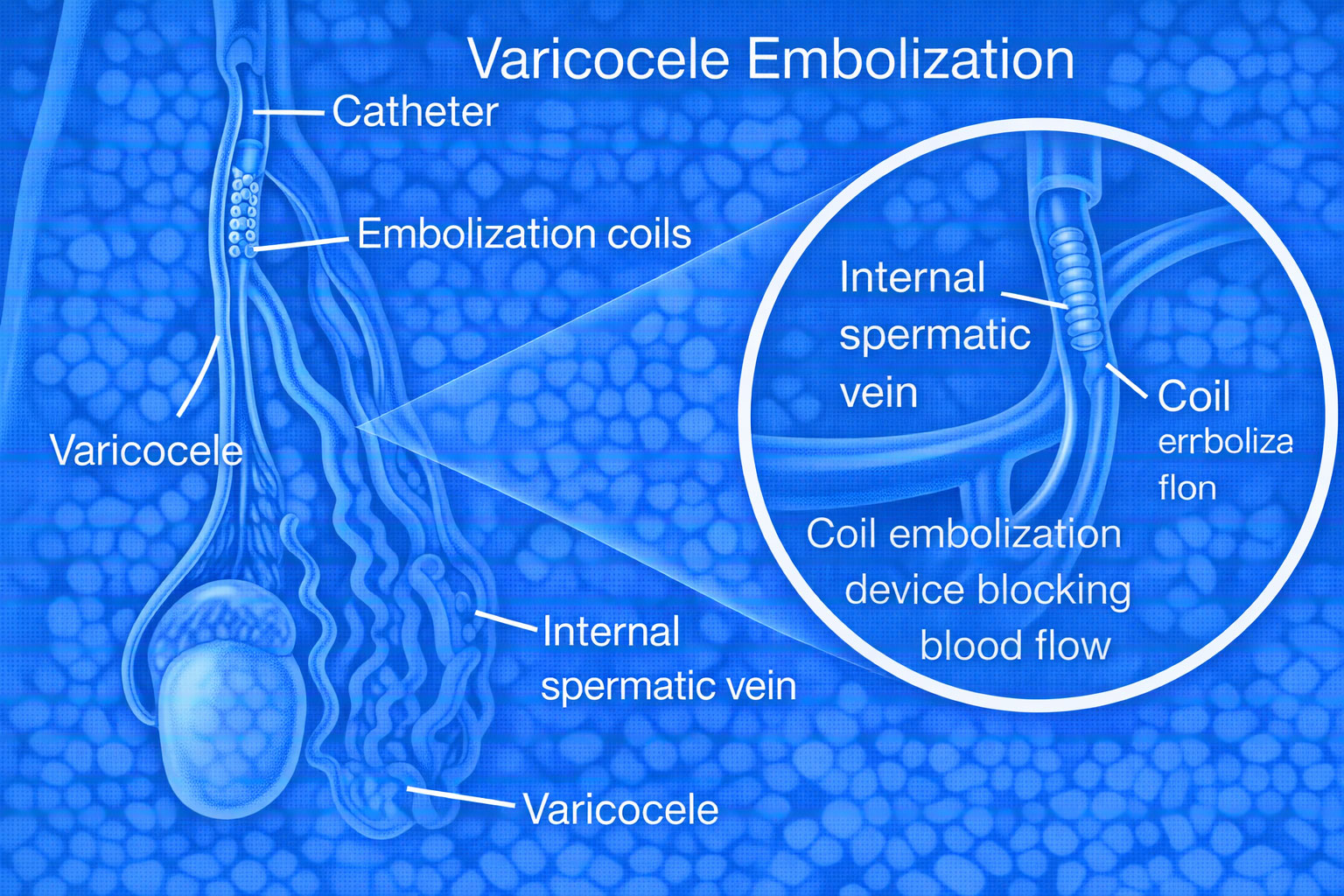
Varicocele embolization is a procedure where a specialist:

  • Uses a thin tube (catheter) inserted through a vein, and
  • Blocks the abnormal, enlarged veins using coils or special medical glue

This:

  • Stops backward blood flow in the faulty veins
  • Reduces pressure and swelling around the testicle
  • Relieves pain and discomfort
  • May improve sperm count and quality
  • Non-surgical

  • No scars or stitches

  • Performed under local anesthesia

  • Usually a day-care procedure

What Is Varicocele?

A varicocele is an enlargement of veins inside the scrotum that drain blood from the testicles. It happens because valves in the veins don’t work properly, causing blood to flow backward and pool.

Varicocele can cause:

  • Dull, aching scrotal pain or heaviness
  • Visible or felt enlarged veins (“bag of worms” feeling)
  • Testicular shrinkage
  • Low sperm count or poor sperm quality
  • Male infertility

Varicoceles are common and affect about 15% of men and up to 40% of men with infertility.

How Is Varicocele Embolization Done?

The procedure is done by an interventional radiologist using X-ray guidance.

Step-by-step:

  • You lie comfortably; local anesthesia is given
  • A thin catheter is inserted through a vein in the groin, arm, or neck
  • The catheter is guided to the veins causing the varicocele
  • Coils or special blocking material are placed to close the abnormal veins
  • Blood is then redirected to healthy veins
  • The catheter is removed, and a small bandage is applied

What Are the Risks?

Varicocele embolization is very safe. Possible risks with approximate incidence include:

  • Mild groin or neck pain/bruising – common (5–10%)
  • Mild scrotal discomfort for a few days – common (10–20%)
  • Infection – rare (<1%)
  • Allergic reaction to contrast dye – rare (<1%)
  • Coil movement or vein spasm – uncommon (<2–3%)
  • Recurrence or incomplete closure of varicocele – uncommon (5–10%)
  • Testicular injury – very rare (<1%)

What Are the Alternatives?

The best treatment for varicocele depends on:

  • Your symptoms and discomfort level
  • Fertility concerns
  • Your overall health and personal preferences

Your doctor will help you choose the most suitable option based on your individual condition.

Alternative 1: No Treatment (Observation Only)

  • Varicocele may be left untreated if symptoms are mild
  • However, the varicocele usually does not go away on its own
  • Symptoms such as pain or heaviness may continue or worsen over time
  • Untreated varicocele may also affect sperm quality and fertility in some men

Regular follow-up may be advised if treatment is deferred.

Alternative 2: Varicocele Surgery

  • Performed by a urologist
  • Involves a small incision in the scrotum or groin
  • The abnormal veins are tied off or removed to redirect blood flow
  • Surgery is equally effective as varicocele embolization in treating the condition

However, compared to embolization:

  • Recovery time is slightly longer
  • There may be more post-procedure discomfort
  • Surgical scars may be present

Choosing the Right Varicocele Treatment

Both surgery and minimally invasive varicocele embolization are effective treatment options. A detailed evaluation helps determine the safest and most appropriate approach based on symptoms, fertility goals, and recovery preferences.

📌 Compared to surgery, embolization offers faster recovery, no scars, and less pain.

What Happens After Your Procedure?

After varicocele embolization:

  • You can usually go home the same day
  • Mild pain or discomfort may last 1–3 days
  • You can return to normal activities in 1–2 days
  • Heavy exercise is usually avoided for about a week
  • Scrotal pain and heaviness often improve over weeks
  • Sperm count and quality may improve over 3–6 months
  • Follow-up visits and semen analysis may be advised if fertility is a concern.

Frequently Asked Questions (FAQs) – Varicocele Embolization

Varicocele embolization is a minimally invasive, non-surgical procedure used to block the enlarged veins that cause varicocele, helping relieve pain and improve sperm quality.

A varicocele is a swelling of veins in the scrotum, similar to varicose veins in the legs. It can cause pain, heaviness, testicular shrinkage, and infertility in some men.

It is done to:

  • Relieve scrotal pain or discomfort
  • Improve fertility and sperm quality
  • Prevent further testicular damage
  • Treat men who want to avoid surgery

No. It is a catheter-based, minimally invasive procedure, not open surgery.

It is done under local anesthesia, so most patients feel only mild discomfort during or after the procedure.

The procedure usually takes 30 to 60 minutes.

No. Most patients go home the same day.

Success rates are similar to surgery, and many patients get good pain relief and improvement in sperm count and quality.

Most patients return to normal daily activities within 1–2 days and avoid heavy exercise for about a week.

Recurrence is uncommon, but it can happen in about 5–10% of cases.

In many men, sperm count and quality improve over 3–6 months, but results vary.

Possible risks include mild pain or bruising, infection, allergy to contrast dye, coil movement, or recurrence. Serious complications are rare.

Embolization is non-surgical, scar-free, done under local anesthesia, and has faster recovery compared to surgery.

The procedure is performed by a trained interventional radiologist.

Yes. It is available in many advanced hospitals and interventional radiology centers across India.

Why Choose Varicocele Embolization?

  • Non-surgical treatment

  • No scars or stitches

  • Performed under local anaesthesia

  • Same-day discharge

  • Faster recovery than surgery

  • Effective for pain relief and infertility improvement

Take the Next Step — Treat Varicocele Without Surgery

If you’re suffering from scrotal pain, discomfort, or fertility issues due to varicocele, you don’t have to live with it. Varicocele embolization offers a safe, minimally invasive, and effective solution with quick recovery and no scars.

Relief, confidence, and better fertility can start with one simple step.