

Chennai-based Endovascular & IR Specialist, Dr. Ravindran Ramalingam offers minimally invasive, scar-free treatments ensuring faster recovery and minimal pain.

Endovascular &
IR Specialist

Center Address
Gleneagles Health City, Perumbakkam, Chennai, TN

Dr. Ravindran Ramalingam is a Chennai-based Endovascular & Interventional Radiology (IR) Specialist with over a decade of experience, delivering minimally invasive, scar-free treatments for faster recovery, less pain, and shorter hospital stays.

Visiting Hours

Uterine Fibroid Embolization

A Non-Surgical, Uterus-Preserving Treatment for Fibroids

Uterine fibroids are very common in women and can cause heavy bleeding, pain, and pressure symptoms that affect daily life. Uterine Fibroid Embolization (UFE) is a modern, minimally invasive treatment that shrinks fibroids without surgery, avoids uterus removal, and allows faster recovery.
👉 Wondering if you can avoid fibroid surgery?

What Is Uterine Fibroid Embolization?

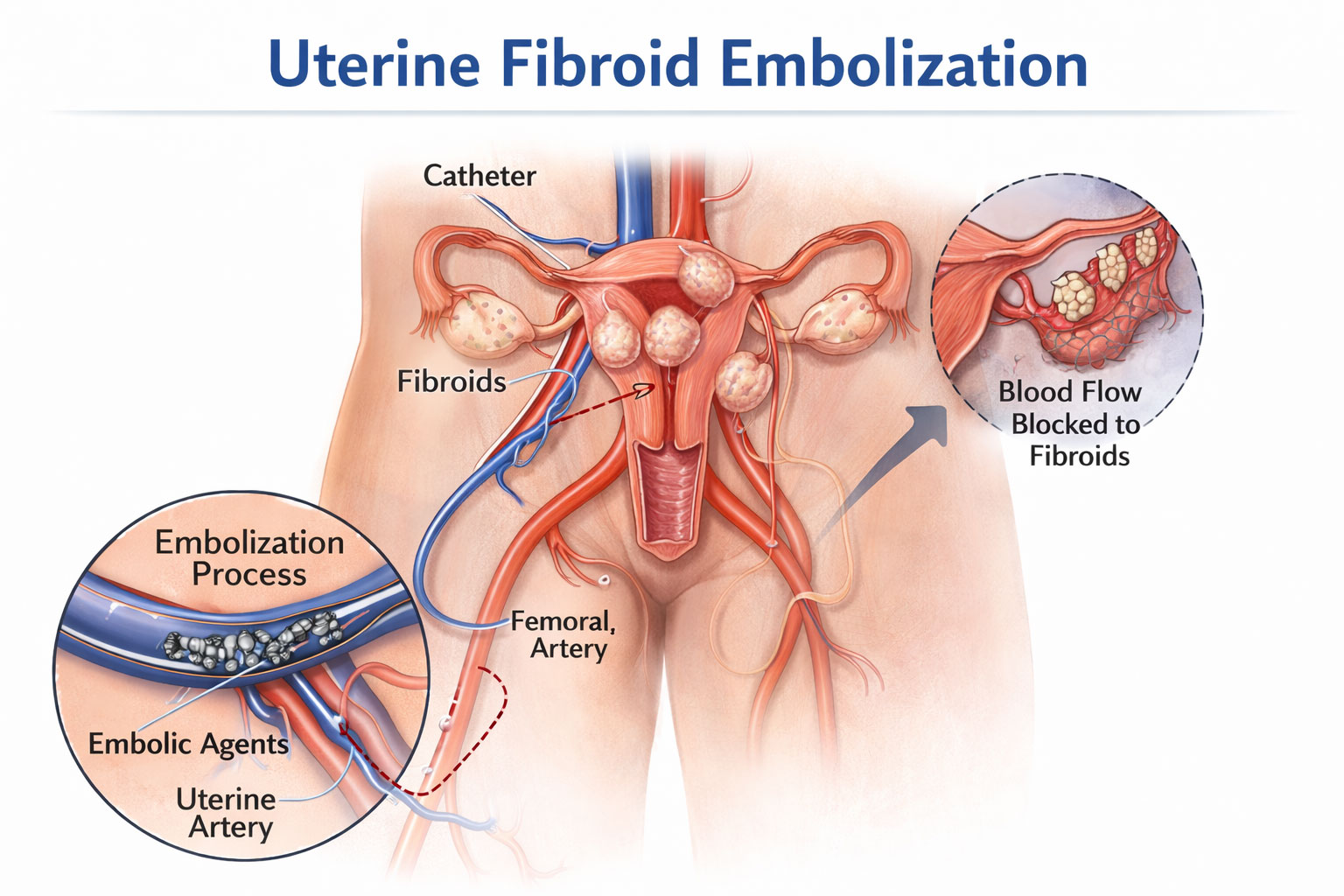
Uterine Fibroid Embolization is a procedure where a specialist:

  • Uses a thin tube (catheter) to reach the uterine arteries, and
  • Injects tiny particles to block blood flow to the fibroids

Without blood supply, fibroids:

  • Shrink over time
  • Become softer
  • Cause fewer symptoms like bleeding and pain

This treatment:

  • Does not remove the uterus
  • Avoids open surgery
  • Has a shorter recovery time
  • Treats multiple fibroids at the same time
  • Minimally invasive

  • Uterus-preserving

  • No large cuts or stitches

  • Proven and effective

Why Is Uterine Fibroid Embolization Done?

UFE is done for women who have symptomatic fibroids, such as:

  • Heavy or prolonged menstrual bleeding
  • Pelvic pain or pressure
  • Frequent urination or constipation due to pressure on organs
  • Abdominal swelling or bloating
  • Anemia due to heavy periods
  • Multiple fibroids causing symptoms
  • Women who want to avoid surgery or are not fit for surgery

Main goals:

  • Reduce fibroid size
  • Control heavy bleeding
  • Relieve pain and pressure
  • Improve quality of life
  • Preserve the uterus

How Is Uterine Fibroid Embolization Done?

The procedure is performed by an interventional radiologist using X-ray guidance.

Step-by-step:

  • You lie comfortably; local anesthesia and sedation are given
  • A small catheter is inserted through an artery in the groin or wrist
  • The catheter is guided to the uterine arteries
  • Tiny particles are released to block blood flow to the fibroids
  • Both sides are usually treated
  • The catheter is removed, and a small bandage is applied

Over the next 3–6 months, fibroids shrink gradually, and symptoms improve significantly.

What Are the Risks?

UFE is generally very safe when done by experienced specialists. Possible risks with approximate incidence include:

  • Crampy pelvic pain after procedure – common (60–90%, usually temporary)
  • Fever, nausea, fatigue (post-embolization syndrome) – common (20–40%)
  • Infection of the uterus or fibroid – uncommon (1–3%)
  • Temporary or permanent change in periods – uncommon (1–5%, higher near menopause)
  • Ovarian function reduction – uncommon (<5%, age-dependent)
  • Bleeding or bruising at puncture site – uncommon (<3–5%)
  • Need for repeat treatment or surgery later – uncommon (5–10%)
  • Serious complications – rare (<1–2%)

What Are the Alternatives?

Treatment options for uterine fibroids depend on:

  • Your symptoms (pain, heavy periods, pressure)
  • The number, size, and location of fibroids
  • Your age and future pregnancy plans
  • Your personal preferences and overall health

Not all fibroids require immediate treatment.

Alternative 1: No Treatment (Observation)

  • Small or symptom-free fibroids may not need treatment
  • Regular monitoring with ultrasound may be advised
  • Some fibroids naturally shrink after menopause due to hormonal changes
  • Suitable for women with mild or no symptoms

Alternative 2: Medications for Fibroids

  • Hormonal medicines or birth control pills may help:
    • Reduce heavy bleeding
    • Improve pain and pressure symptoms
    • Shrink fibroids temporarily
  • Medications are often the first-line treatment
  • However, medicines do not permanently remove fibroids
  • Studies show that about 3 out of 5 women who start medicines may need another treatment within two years

Alternative 3: Surgery for Fibroids

Hysterectomy (Removal of the Uterus)

  • Complete removal of the uterus
  • Fibroids do not return after hysterectomy
  • Considered a definitive treatment
  • However:
    • It involves major surgery
    • Has the highest risk and longest recovery time
    • Pregnancy is not possible afterward
    • Some women may develop pelvic floor weakness

Myomectomy (Removal of Fibroids Only)

  • Removes fibroids while preserving the uterus
  • Pregnancy may still be possible
  • Recovery is usually easier than hysterectomy
  • However, fibroids can recur over time

Choosing the Right Fibroid Treatment

Every woman’s condition is unique. A personalized evaluation helps determine whether observation, medications, surgery, or a minimally invasive fibroid treatment like Uterine Fibroid Embolization (UFE) is the best option.

📌 Compared to surgery, UFE offers fewer complications, uterine preservation, and quicker recovery.

What Happens After Your Procedure?

After UFE:

  • You may have cramping pain for a few days (controlled with medicines)
  • Mild fever, tiredness, or nausea may occur for a few days
  • Most patients go home in 1–2 days
  • You can usually return to light activities in a few days and normal routine in 1–2 weeks
  • Periods usually become lighter over the next few months
  • Fibroids continue to shrink for 3–6 months or more
  • Follow-up scans may be done to check fibroid size reduction

Frequently Asked Questions (FAQs) – Uterine Fibroid Embolization (UFE)

Uterine fibroid embolization is a minimally invasive, non-surgical treatment that shrinks fibroids by blocking their blood supply, helping reduce heavy bleeding, pain, and pressure symptoms while preserving the uterus.

Women with symptomatic fibroids (heavy periods, pelvic pain, pressure, frequent urination, or anemia) who want to avoid surgery or keep their uterus may be good candidates.

No. UFE is a catheter-based, image-guided procedure, not open surgery.

No. Your uterus is not removed. Only the blood supply to the fibroids is blocked so they shrink over time.

The procedure itself is done under anesthesia or sedation. Afterward, cramping pain is common for a few days but is temporary and controlled with medicines.

The procedure usually takes 60 to 90 minutes.

Most patients stay 1 to 2 days and then go home.

Most women experience significant improvement in heavy bleeding and pain, and fibroids usually shrink by 40–70% or more over time.

Symptoms often start improving within a few weeks, with continued improvement over 3–6 months as fibroids shrink.

Many women have become pregnant after UFE, but if you plan future pregnancy, you should discuss this with your doctor before choosing this treatment.

The treated fibroids usually do not grow back, but new fibroids can develop in some women over time.

Possible risks include crampy pain, fever, infection, changes in periods, bleeding at the puncture site, or rarely more serious complications. Serious problems are uncommon.

UFE is non-surgical, scar-free, and has faster recovery, while myomectomy and hysterectomy are surgical procedures with longer recovery time.

Most women return to light activities in a few days and normal routine in 1–2 weeks.

Yes. UFE is a well-established and safe procedure when performed by experienced specialists.

Why Choose Uterine Fibroid Embolization?

  •  Non-surgical treatment

  • No cuts, scars, or stitches

  • Uterus-preserving

  • Short hospital stay

  • Faster recovery than surgery

  • Treats multiple fibroids at once

Take the Next Step — Treat Fibroids Without Surgery

If you’re suffering from heavy periods, pelvic pain, or pressure due to fibroids, you don’t have to live with it. Uterine Fibroid Embolization offers a safe, minimally invasive, uterus-preserving solution with faster recovery and long-lasting relief.

Take back control of your health—without major surgery.