
Chennai-based Endovascular & IR Specialist, Dr. Ravindran Ramalingam offers minimally invasive, scar-free treatments ensuring faster recovery and minimal pain.

Endovascular &
IR Specialist

Center Address
Gleneagles Health City, Perumbakkam, Chennai, TN

Dr. Ravindran Ramalingam is a Chennai-based Endovascular & Interventional Radiology (IR) Specialist with over a decade of experience, delivering minimally invasive, scar-free treatments for faster recovery, less pain, and shorter hospital stays.

Visiting Hours

Neurolysis for Pain Management

Targeted Nerve Treatment for Long-Lasting Pain Relief

Chronic pain can severely affect sleep, appetite, movement, and quality of life. When medicines and routine pain injections no longer provide relief, Neurolysis offers a targeted, image-guided option to control pain by treating the specific nerve causing itwithout major surgery.

👉 Living with severe or long-standing pain?

What Is Neurolysis?

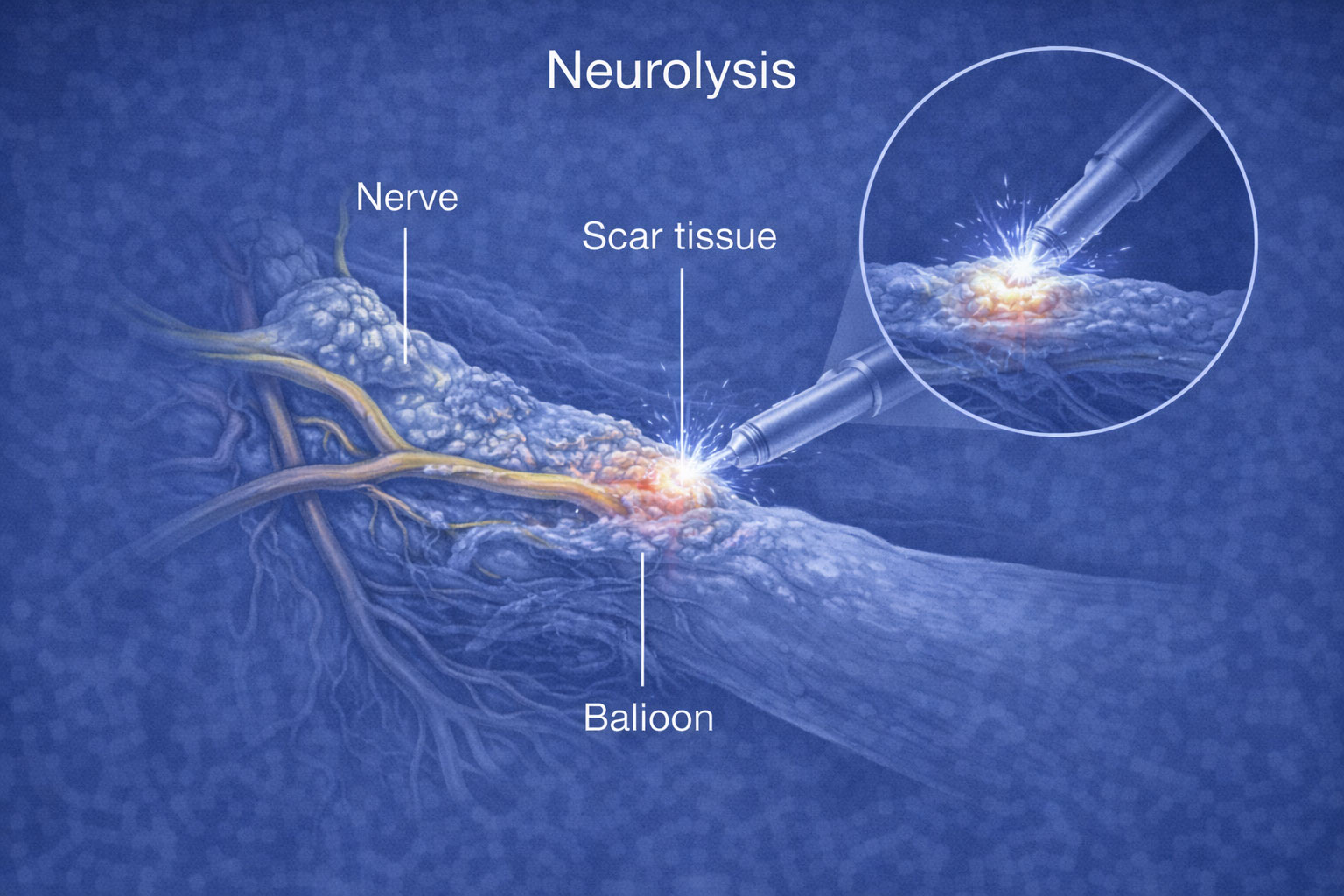
Neurolysis is a minimally invasive pain-relief procedure in which specific nerves responsible for pain are selectively blocked or destroyed using medication or controlled chemicals.

It helps by:

  • Interrupting pain signals to the brain
  • Providing longer-lasting relief than routine nerve blocks
  • Improving comfort, movement, and daily function
  • No open surgery
  • Image-guided and precise
  • Day-care procedure
  • Can significantly reduce pain medication use

Why Is Neurolysis Done?

Neurolysis is done when pain is severe, persistent, and not controlled with standard treatments.

It is commonly used for:

  • Cancer-related pain (pancreatic, abdominal, pelvic cancers)
  • Chronic abdominal pain
  • Severe back or pelvic pain
  • Nerve-related pain not responding to medicines
  • Pain affecting quality of life despite strong painkillers

Neurolysis is especially useful when pain originates from well-defined nerve pathways.

How Is Neurolysis Done?

Neurolysis is performed by a trained pain or interventional specialist using X-ray, CT, or ultrasound guidance.

Step-by-step procedure:

  • You lie comfortably on the procedure table
  • Local anesthesia is given to numb the skin
  • A thin needle is guided precisely to the target nerve
  • Test injection confirms correct position
  • Neurolytic agent (alcohol, phenol, or medication) is injected
  • Needle is removed and a small dressing is applied

What Are the Risks?

Neurolysis is generally safe when performed by experienced specialists.
Most side effects are temporary.

Possible risks with approximate incidence include:

  • Temporary increase in pain – common (20–30%)
  • Local soreness or bruising – common (15–25%)
  • Temporary numbness or weakness – uncommon (5–10%)
  • Low blood pressure or dizziness – uncommon (5%)
  • Infection – rare (<1%)
  • Unintended nerve irritation – very rare (<1%)

What Are the Alternatives?

Treatment options vary based on:

  • The type and severity of pain
  • Your overall health and daily activities
  • Personal preferences and treatment goals

Often, a combination of treatments is used to achieve better pain control. Your clinician will help you choose the most suitable option.

Alternative 1: Nerve Block (Temporary Pain Relief)

  • A short-term version of neurolysis
  • Involves injecting numbing medication around the nerve
  • Temporarily puts the nerve “to sleep” without damaging it
  • Used for temporary pain relief or as a diagnostic test to confirm the source of pain before considering neurolysis

Alternative 2: Medications for Pain Control

  • Includes painkillers and other pain-relieving medicines
  • Can help reduce mild to moderate pain
  • May be insufficient for severe or long-standing pain
  • Long-term use may have side effects in some patients

Alternative 3: Physical Therapy

  • Focuses on strengthening muscles around the painful area
  • Helps improve mobility and reduce stiffness or scar tissue
  • More effective for muscle-related or early pain conditions

Alternative 4: Meditation and Mind-Body Techniques

  • Can help some individuals cope better with chronic pain
  • Often used as a supportive or complementary approach
  • Results vary between individuals

Alternative 5: Acupuncture

  • May provide pain relief in some patients
  • Commonly used as an alternative or adjunct therapy
  • Effectiveness differs from person to person

Choosing the Right Pain Treatment

When pain is severe or persistent, minimally invasive treatments like image-guided neurolysis may offer longer-lasting relief compared to conservative methods. A personalized evaluation helps identify the most effective and safest approach.

📌 Neurolysis is considered when other pain treatments fail or provide only short relief.

What Happens After Your Procedure?

Recovery is usually smooth.

After neurolysis:

  • You are observed briefly and then discharged
  • Mild soreness may last a few days
  • Pain relief may begin within hours to days
  • Reduction in pain medicines may be possible
  • Normal activities usually resume within 1–2 days

Pain relief can last weeks to months, depending on the condition.

Frequently Asked Questions (FAQs) – Neurolysis for Pain Management

Neurolysis is a minimally invasive procedure used to reduce severe or chronic pain by interrupting pain signals from specific nerves using image-guided injections.

Neurolysis is done when pain:

  • Is severe or long-standing
  • Does not improve with medicines or routine injections
  • Is affecting sleep, appetite, or daily activities
    It is commonly used for cancer-related pain and chronic nerve pain.

Yes. When performed by experienced specialists under imaging guidance, neurolysis is safe and effective, with serious complications being rare.

The procedure is done under local anesthesia, so pain during the procedure is minimal. Some patients may experience temporary soreness afterward.

Pain relief can last several weeks to months, and in some cases longer. Duration varies depending on the cause of pain.

Neurolysis may be suitable for patients with:

  • Cancer-related pain
  • Severe abdominal or pelvic pain
  • Chronic nerve-related pain not controlled by medicines

Final suitability is decided after specialist evaluation.

No. Neurolysis does not cure the disease, but it significantly reduces pain and improves quality of life.

Yes. Neurolysis can be safely repeated if pain returns or increases.

Most side effects are mild and temporary, such as local soreness or short-term numbness. Serious side effects are uncommon.

Many patients are able to reduce their pain medication dose after successful neurolysis, under medical supervision.

No. Neurolysis is usually a day-care procedure, and patients go home the same day.

A nerve block provides temporary pain relief, while neurolysis offers longer-lasting relief by targeting the nerve more definitively.

Yes. Neurolysis is available in specialized pain management and interventional centers across India.

You should consider neurolysis if:

  • Pain medicines are no longer effective
  • Pain significantly affects quality of life
  • You want a non-surgical pain management option

Why Choose Neurolysis for Pain Management?

  • Targeted nerve-based pain relief

  • Non-surgical procedure

  • Image-guided precision

  • Reduces dependency on painkillers

  • Improves quality of life

Take the Next Step Toward Pain Relief

If chronic pain is affecting your sleep, appetite, or daily activities, you don’t have to live with it.

Neurolysis offers an advanced, minimally invasive solution for long-term pain control.