

Chennai-based Endovascular & IR Specialist, Dr. Ravindran Ramalingam offers minimally invasive, scar-free treatments ensuring faster recovery and minimal pain.

Endovascular &
IR Specialist

Center Address
Gleneagles Health City, Perumbakkam, Chennai, TN

Dr. Ravindran Ramalingam is a Chennai-based Endovascular & Interventional Radiology (IR) Specialist with over a decade of experience, delivering minimally invasive, scar-free treatments for faster recovery, less pain, and shorter hospital stays.

Visiting Hours

Fallopian Tube Recanalization

A Non-Surgical Treatment for Blocked Fallopian Tubes and Infertility

Blocked fallopian tubes are a common cause of female infertility. Many women are advised IVF without knowing that a simple, minimally invasive procedure may reopen the tubes.

Fallopian Tube Recanalization (FTR) is a non-surgical, image-guided treatment that can restore tubal patency and help achieve natural pregnancy.
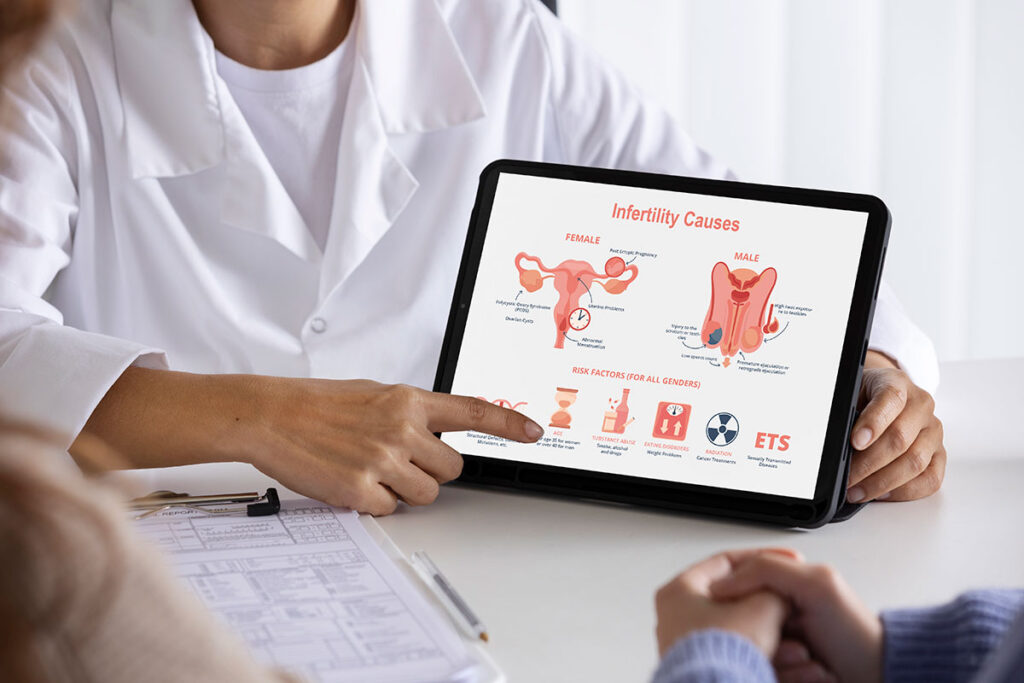
👉 Trying to conceive but diagnosed with blocked tubes?

What Is Fallopian Tube Recanalization?

Fallopian tube recanalization (FTR) is a minimally invasive procedure used to open blocked fallopian tubes using fine catheters under X-ray guidance.

This procedure:

  • Clears mucus plugs or minor blockages
  • Restores tubal function
  • Improves chances of natural conception
  • Avoids surgery and scars
  • No surgery

  • No stitches

  • Day-care procedure

  • Preserves fertility

Why Is Fallopian Tube Recanalization Done?

Fallopian tube recanalization is done when:

  • One or both fallopian tubes are blocked
  • Infertility is due to proximal (near-uterus) tubal blockage
  • HSG shows tubal obstruction
  • The woman wants to try natural conception

Common causes of tubal blockage include:

  • Infection or inflammation
  • Previous pelvic procedures
  • Mucus plugs or debris
  • Mild scarring

How Is Fallopian Tube Recanalization Done?

The procedure is performed by an interventional radiologist under fluoroscopy (X-ray) guidance.

Step-by-step procedure:

  • You lie comfortably on the procedure table
  • A thin catheter is gently passed through the cervix into the uterus
  • Contrast dye is injected to identify the blockage
  • A micro-catheter and guidewire are used to open the blocked tube
  • Dye flow confirms successful recanalization
  • The catheter is removed, and the procedure ends

What Are the Risks?

Fallopian tube recanalization is very safe when done by experienced specialists.
Possible risks with approximate incidence include:

  • Mild pelvic pain or cramping – common (20–30%)
  • Light vaginal spotting – common (10–20%)
  • Infection – rare (<1%)
  • Tubal perforation – very rare (<1%)
  • Allergic reaction to contrast dye – rare (<2%)

What Are the Alternatives?

Treatment options depend on:

  • Your fertility goals and personal preferences
  • The location and cause of the tubal blockage
  • Your age and overall reproductive health
  • Other medical conditions, if any

Your OB/Gyn or fertility specialist will guide you through the most suitable options.

Alternative 1: Surgery to Re-open the Fallopian Tubes

  • Involves surgical repair or reconstruction of the blocked tubes
  • Can be effective for selected types and locations of blockage
  • Allows pregnancy to occur naturally without repeated procedures
  • However:
    • Pregnancy rates are lower compared to IVF
    • Surgery carries risks and longer recovery time
    • There is a risk of multiple or ectopic pregnancies

Alternative 2: Assisted Reproductive Technologies (ART)

  • Includes treatments such as In Vitro Fertilization (IVF)
  • Helps achieve pregnancy without reopening the fallopian tubes
  • Suitable when surgery is not possible or has failed
  • Offers higher pregnancy rates in many cases
  • Includes different techniques, each with its own risks, costs, and benefits

Choosing the Right Fertility Treatment

Each woman’s fertility journey is unique. A personalized evaluation helps determine whether tubal surgery, ART, or minimally invasive tubal procedures offer the best chance for a successful pregnancy.

📌 Compared to IVF or surgery, recanalization is less invasive, more affordable, and allows natural conception.

What Happens After Your Procedure?

Recovery is usually quick and easy.

After fallopian tube recanalization:

  • You can go home the same day
  • Mild cramps may last a few hours
  • Normal activities resume in 24 hours
  • Sexual activity is usually advised after a short gap
  • Pregnancy can occur in the following cycles

Many women conceive naturally within 3–6 months after successful recanalization.

Frequently Asked Questions (FAQs) – Fallopian Tube Recanalization

Fallopian tube recanalization is a minimally invasive, non-surgical procedure used to open blocked fallopian tubes using fine catheters under X-ray guidance, improving the chance of natural pregnancy.

It is done to treat female infertility caused by blocked fallopian tubes, especially when the blockage is near the uterus (proximal tubal block).

Women who:

  • Have one or both tubes blocked on HSG
  • Have infertility due to proximal tubal blockage
  • Want to try natural conception before IVF
  • Have no severe tubal damage or infection

Yes. When performed by experienced specialists, fallopian tube recanalization is safe and well established, with serious complications being rare.

Most women experience mild cramping, similar to period pain. The discomfort is temporary and usually well tolerated.

The procedure usually takes 20–40 minutes and is done as a day-care procedure.

The technical success rate is about 80–90%, and many women conceive naturally within a few months after the procedure.

Yes. If both tubes are blocked proximally, both can be treated during the same procedure.

General anesthesia is usually not required, and hospital admission is not needed. Most patients go home the same day.

Re-blockage can occur in some cases, but the procedure can be safely repeated if required.

For selected patients with proximal tubal blockage, recanalization allows natural conception and is often tried before IVF, as it is less invasive and more affordable.

Most doctors advise trying for pregnancy from the next menstrual cycle, unless advised otherwise.

Risks are uncommon and usually mild, such as temporary pelvic discomfort or light spotting. Serious complications are very rare (<1%).

Yes. It is available in specialized fertility and interventional radiology centers across India.

You should seek evaluation if:

  • You are unable to conceive
  • HSG shows blocked fallopian tubes
  • You want non-surgical fertility options before IVF

Why Choose Fallopian Tube Recanalization?

  • Non-surgical fertility treatment

  • Preserves fallopian tubes

  • No scars or stitches

  • Same-day discharge

  • Affordable alternative to IVF

  • Supports natural pregnancy

Take the Next Step Toward Parenthood

If blocked fallopian tubes are standing between you and pregnancy, you may not need surgery or IVF immediately.

Fallopian Tube Recanalization offers a safe, simple, and fertility-preserving solution.