

Chennai-based Endovascular & IR Specialist, Dr. Ravindran Ramalingam offers minimally invasive, scar-free treatments ensuring faster recovery and minimal pain.

Endovascular &
IR Specialist

Center Address
Gleneagles Health City, Perumbakkam, Chennai, TN

Dr. Ravindran Ramalingam is a Chennai-based Endovascular & Interventional Radiology (IR) Specialist with over a decade of experience, delivering minimally invasive, scar-free treatments for faster recovery, less pain, and shorter hospital stays.

Visiting Hours

Trans-Arterial Microembolization for Chronic Joint Pain

A Non-Surgical, Image-Guided Treatment for Long-Standing Joint Pain

Chronic joint pain can affect walking, daily activities, sleep, and overall quality of life. When medicines, physiotherapy, or injections stop working, Trans-arterial Microembolization (TAME) offers a modern, minimally invasive, non-surgical option to reduce pain and inflammation—without joint replacement surgery.
👉 Living with long-standing joint pain?

What Is Trans-Arterial Microembolization?

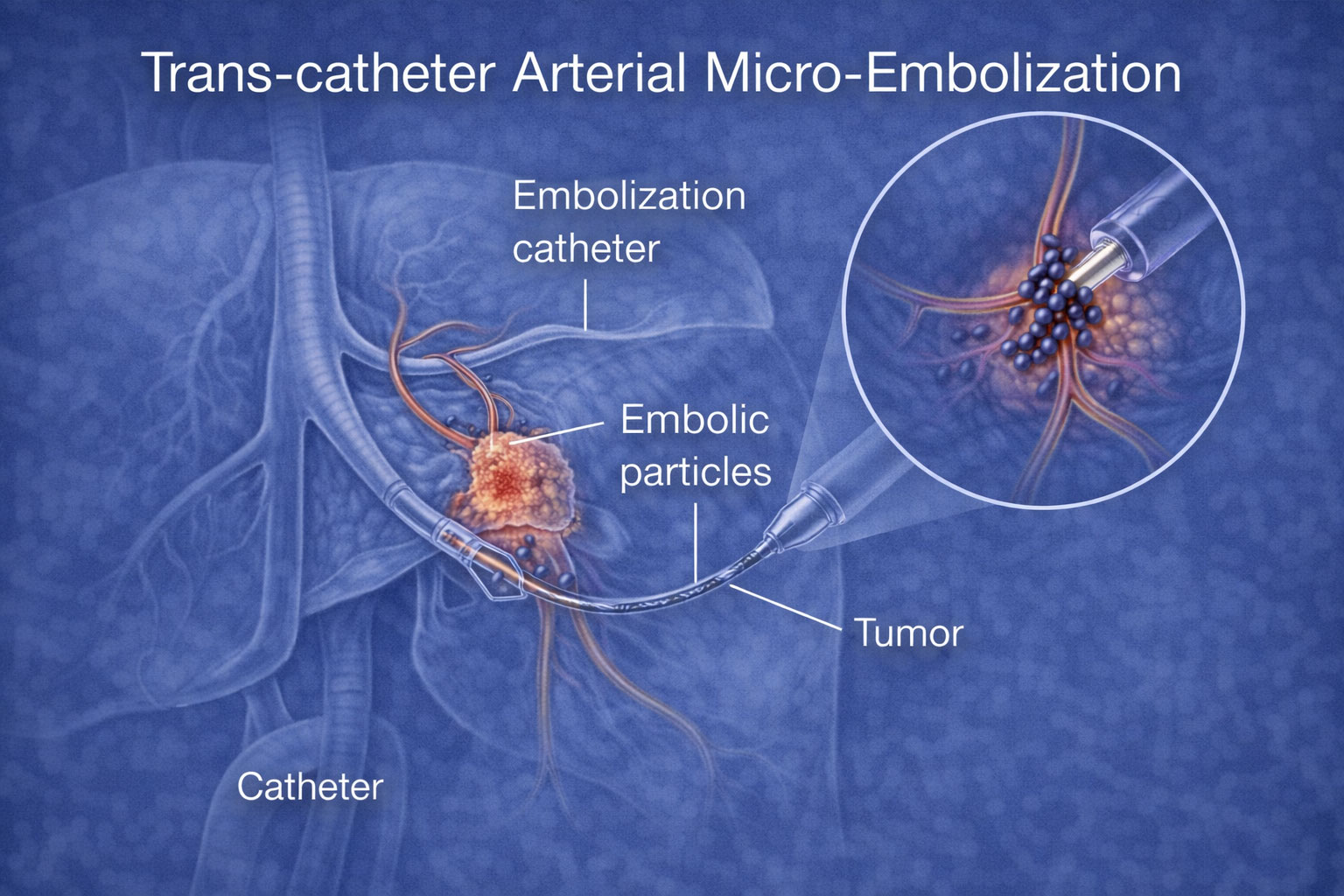
Trans-arterial Microembolization (TAME) is a minimally invasive, image-guided procedure used to treat chronic joint pain by targeting abnormal inflammatory blood vessels around painful joints.

By blocking these tiny abnormal vessels:

  • Inflammation reduces
  • Pain signals decrease
  • Joint movement improves
  • Daily function and comfort increase
  • No open surgery

  • No joint replacement

  • No stitches or scars

  • Faster recovery

What is Chronic Joint Pain?

Chronic joint pain refers to joint pain lasting more than 3 months and not responding well to routine treatments.

Common causes include:

  • Osteoarthritis
  • Tendinitis
  • Synovitis (joint lining inflammation)
  • Post-injury joint pain
  • Overuse or age-related degeneration
  • Frozen shoulder

Commonly affected joints:

  • Knee
  • Shoulder
  • Hip
  • Ankle
  • Elbow

In chronic pain, abnormal new blood vessels form around the joint, increasing inflammation and pain. TAME directly targets these vessels.

How Is Trans-Arterial Microembolization Done?

The procedure is performed by an interventional radiologist using live X-ray guidance.

Step-by-step process:

  • Local anesthesia is given (you remain awake and comfortable)
  • A thin catheter is inserted through a small puncture in the groin or wrist
  • Tiny blood vessels supplying the painful joint are identified
  • Microscopic particles are gently injected to block abnormal inflammatory vessels
  • Normal blood supply to healthy tissue is preserved
  • The catheter is removed and a small bandage is applied

What Are the Risks?

Trans-arterial microembolization is generally very safe when performed by experienced specialists. Most side effects are mild and temporary.

Possible risks with approximate incidence include:

  • Temporary increase in joint pain – common (20–30%)
  • Mild swelling or warmth around joint – common (15–25%)
  • Bruising at puncture site – common (10–15%)
  • Skin discoloration or numbness – uncommon (5–8%)
  • Infection – rare (<1%)
  • Non-target embolization – very rare (<1%)

What Are the Alternatives?

Treatment options for chronic joint pain depend on:

  • Your pain severity and daily activity limitations
  • Overall health and existing medical conditions
  • Personal preferences and lifestyle needs

Often, a combination of treatments is used to achieve better pain control.

Alternative 1: Pain Medications

  • Commonly used to manage chronic joint pain and inflammation
  • May provide relief for mild to moderate pain
  • In some patients, pain relief may be inadequate or temporary

Alternative 2: Physical Therapy

  • Helps strengthen muscles around the joint
  • Improves flexibility and joint stability
  • Can reduce stiffness and scar tissue
  • Most effective in early or moderate joint problems

Alternative 3: Acupuncture

  • May offer pain relief in some individuals
  • Results vary from person to person
  • Often used as a supportive or complementary therapy

Alternative 4: Steroid Injections

  • Steroid medicines injected directly into the joint
  • Help reduce inflammation and pain
  • Relief may be temporary, and pain can return
  • Repeat injections may be required
  • Commonly tried before moving to more invasive treatments

Alternative 5: Joint Surgery or Joint Replacement

  • Includes joint repair or complete joint replacement
  • Can provide significant and long-lasting pain relief
  • Requires hospitalization and longer recovery time
  • Not suitable for everyone, especially patients with other medical conditions

Choosing the Right Joint Pain Treatment

Every patient’s condition is unique. A detailed assessment helps identify the most effective, safest, and least invasive treatment option, based on symptoms, health status, and recovery goals.

📌 Compared to surgery, microembolization is non-surgical, repeatable, and joint-preserving.

What Happens After Your Procedure?

Recovery is usually quick and smooth.

After the procedure:

  • Most patients walk the same day
  • Mild discomfort may last a few days
  • Pain relief often starts within 1–3 weeks
  • Improvement continues over 1–3 months
  • Normal activities resume in 2–3 days
  • Physiotherapy may be advised for best results

Many patients report significant pain relief and improved mobility.

Frequently Asked Questions (FAQs) – Trans-arterial Microembolization for Chronic Joint Pain

Trans-arterial Microembolization (TAME) is a minimally invasive, non-surgical treatment for chronic joint pain. It reduces pain by blocking tiny abnormal blood vessels that cause inflammation around painful joints.

TAME is commonly used for chronic pain in the:

  • Knee
  • Shoulder
  • Hip
  • Ankle
  • Elbow

It is especially helpful when pain does not improve with medicines or injections.

You may be suitable if you have:

  • Joint pain lasting more than 3 months
  • Pain due to osteoarthritis, tendinitis, or inflammation
  • Poor response to medicines, physiotherapy, or injections
  • Desire to avoid surgery or joint replacement

Yes. TAME is a safe and well-studied procedure when performed by experienced interventional radiologists. Serious complications are very rare.

Clinical studies show that 70–85% of patients experience significant pain reduction and improved joint function after TAME.

Many patients notice pain relief within 1–3 weeks, with continued improvement over the next 1–3 months.

TAME does not cure arthritis, but it reduces inflammation and pain, helping patients move better and improve daily activities.

The procedure itself is not painful as it is done under local anesthesia. Mild joint soreness or discomfort may occur for a few days after treatment.

Recovery is quick:

  • Most patients walk the same day
  • Normal activities resume within 2–3 days
  • Strenuous activity may be avoided for about a week

TAME is not a replacement for joint replacement in advanced disease, but it is an excellent option to delay or avoid surgery in selected patients.

Yes. Trans-arterial Microembolization can be safely repeated if pain returns or if further relief is needed.

No. It is usually a day-care procedure, and most patients go home the same day.

Yes. TAME is available in specialized centers across India and is performed by trained interventional radiologists.

You should consider TAME if:

  • Joint pain affects walking or daily life
  • Medications and injections are no longer effective
  • You want a non-surgical pain relief option

Why Choose Genicular Artery Embolization?

  • Non-surgical pain treatment

  • No joint replacement

  • No scars or stitches

  • Performed under local anesthesia

  • Faster recovery than surgery

  • Preserves natural joint

Take the Next Step — Without Surgery

If chronic joint pain is limiting your movement, independence, or lifestyle, you don’t have to wait for surgery.

Trans-arterial Microembolization offers a modern, minimally invasive solution for long-standing joint pain.