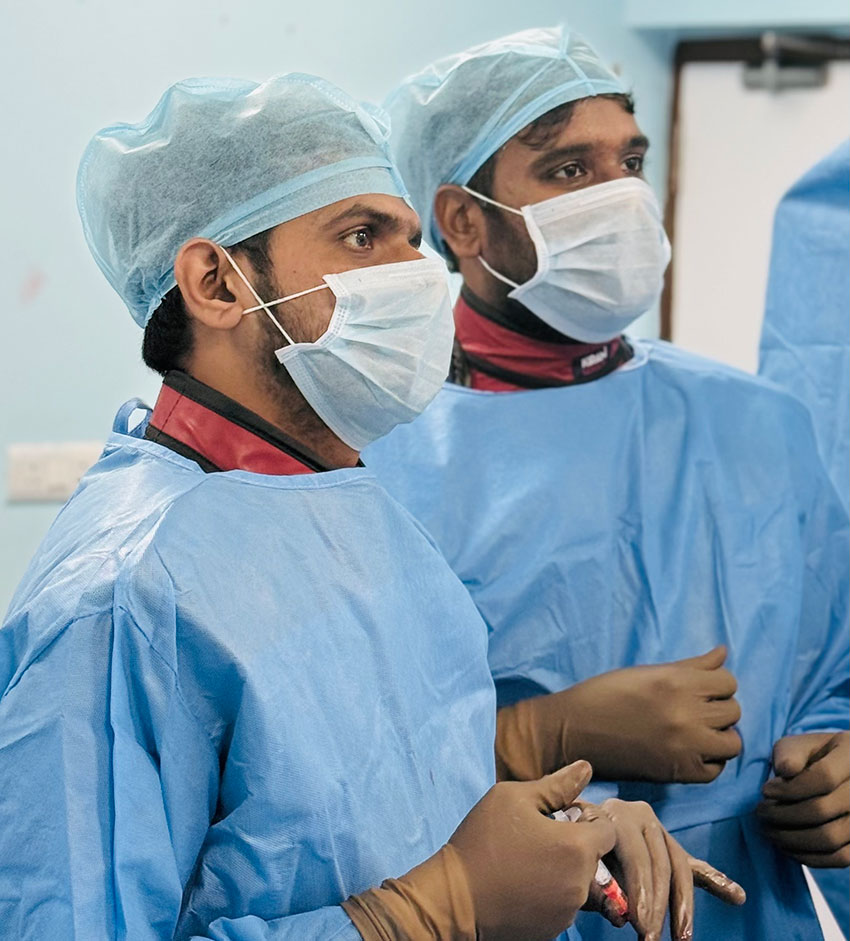
Chennai-based Endovascular & IR Specialist, Dr. Ravindran Ramalingam offers minimally invasive, scar-free treatments ensuring faster recovery and minimal pain.

Endovascular &
IR Specialist

Center Address
Gleneagles Health City, Perumbakkam, Chennai, TN

Dr. Ravindran Ramalingam is a Chennai-based Endovascular & Interventional Radiology (IR) Specialist with over a decade of experience, delivering minimally invasive, scar-free treatments for faster recovery, less pain, and shorter hospital stays.

Visiting Hours

How to change your dressings

Our Guiding Principle

Our guiding principle is to make recovery safe, simple, and stress-free. Proper dressing care helps protect the procedure site, reduces the risk of infection, and supports smooth healing. We focus on gentle, hygienic practices that patients and caregivers can follow easily at home without fear or confusion, while knowing exactly when to seek help.

Understanding Why Dressing Changes Are Important

Dressings protect the wound from bacteria, absorb any discharge, and allow the skin to heal properly. If dressings are not changed correctly or on time, there is a higher risk of infection, delayed healing, or discomfort. When done properly, dressing changes are straightforward and usually painless, playing a key role in a successful recovery.

How Care Works at Home

Before discharge, patients are shown how to change their dressings using clean techniques and simple steps. This includes proper hand hygiene, safe removal of the old dressing, cleaning the area if advised, and applying a fresh dressing correctly. Instructions are tailored to the type of procedure and wound, ensuring care remains appropriate and effective.

Care at Our Centre

Changing your dressings is an essential part of recovery after a minimally invasive or image-guided procedure. At our centre, we understand that wound care at home can feel intimidating at first. That is why dressing care is explained clearly and calmly, so patients feel confident, informed, and supported throughout the healing process rather than anxious or uncertain.

Day-to-Day Dressing Care

Dressing changes should be done gently and without rushing. Patients are advised to observe the wound each time for signs of redness, swelling, discharge, or unusual pain. Any concerns are addressed during follow-up visits or earlier if needed, ensuring problems are identified and managed early rather than ignored.

Recovery and Ongoing Support

Dressing care is part of a broader recovery plan designed to promote healing with minimal discomfort. Follow-up appointments allow the care team to assess the wound, adjust instructions if required, and decide when dressings are no longer needed. Patients are never left guessing about the next step in their recovery.

Our Promise to You

We promise to guide you through recovery with patience, clarity, and honesty. Dressing care instructions are given with the same attention and respect as treatment itself. Our goal is to help you heal safely and confidently, knowing that support is always available when you need it.

Why Choose Us for Dressing Care Guidance

Patients choose our centre for post-procedure care because recovery is treated as an extension of treatment, not an afterthought. Clear communication and patient comfort remain central at every stage.
Icon

Clear, Simple Home-Care Education

Dressing changes are explained in easy-to-understand language with practical guidance, helping patients and caregivers feel confident managing care at home.

Icon

Safety-Focused, Ethical Approach

We emphasize hygiene, gentle handling, and early recognition of warning signs to reduce complications and support healthy healing.

Icon

Personalized, Appointment-Only Follow-Up

Each follow-up visit is unhurried and focused, allowing time to review wound healing and address patient concerns thoroughly.

Icon

Continued Support Beyond Discharge

Our team remains accessible during recovery, ensuring patients feel reassured and guided even after leaving the clinic.

Frequently Asked Questions

The frequency depends on the type of procedure and wound. This is clearly explained during discharge and may be adjusted during follow-up based on healing.
Mild sensitivity can be normal, especially in the early days. However, increasing pain or sharp discomfort should be reported for evaluation.
Do not pull forcefully. Slightly moistening the dressing, if advised, can help. If difficulty persists, contact the clinic for guidance.
Yes. Most patients or caregivers can safely change dressings at home after proper instruction from the care team.
Redness, swelling, foul-smelling discharge, fever, or increasing pain should be reported promptly, as they may indicate infection.
This depends on how the wound heals and is decided during follow-up after careful assessment by the treating doctor.

Need Help? I'm Just a Click Away!