
Chennai-based Endovascular & IR Specialist, Dr. Ravindran Ramalingam offers minimally invasive, scar-free treatments ensuring faster recovery and minimal pain.

Endovascular &
IR Specialist

Center Address
Gleneagles Health City, Perumbakkam, Chennai, TN

Dr. Ravindran Ramalingam is a Chennai-based Endovascular & Interventional Radiology (IR) Specialist with over a decade of experience, delivering minimally invasive, scar-free treatments for faster recovery, less pain, and shorter hospital stays.

Visiting Hours

Breast Biopsy

A Simple and Accurate Test to Understand a Breast Lump

Finding a breast lump can be scary—but the good news is that most breast lumps are benign (non-cancerous).

A breast biopsy is a safe, minimally invasive test that helps doctors clearly identify the nature of a breast lump and decide the right treatment—without surgery in most cases.
👉 Found a breast lump or abnormal scan?

What Is a Breast Biopsy?

A breast biopsy is a medical test in which a small sample of tissue or cells is taken from a breast lump or suspicious area and examined under a microscope.

It helps to:

  • Confirm whether a lump is benign or cancerous
  • Avoid unnecessary breast surgery
  • Plan the most appropriate treatment
  • Provide clarity and peace of mind
  • No open surgery (in most cases)

  • No stitches

  • Quick outpatient procedure

  • Highly accurate diagnosis

Why Is Breast Biopsy Done?

A breast biopsy is done when:

  • A breast lump is felt on examination
  • Mammogram or ultrasound shows a suspicious area
  • A lump is increasing in size
  • There is nipple discharge or skin change
  • Doctors need to rule out breast cancer

📌 Not every breast lump is cancer—but testing is essential to be sure.

How Is Breast Biopsy Done?

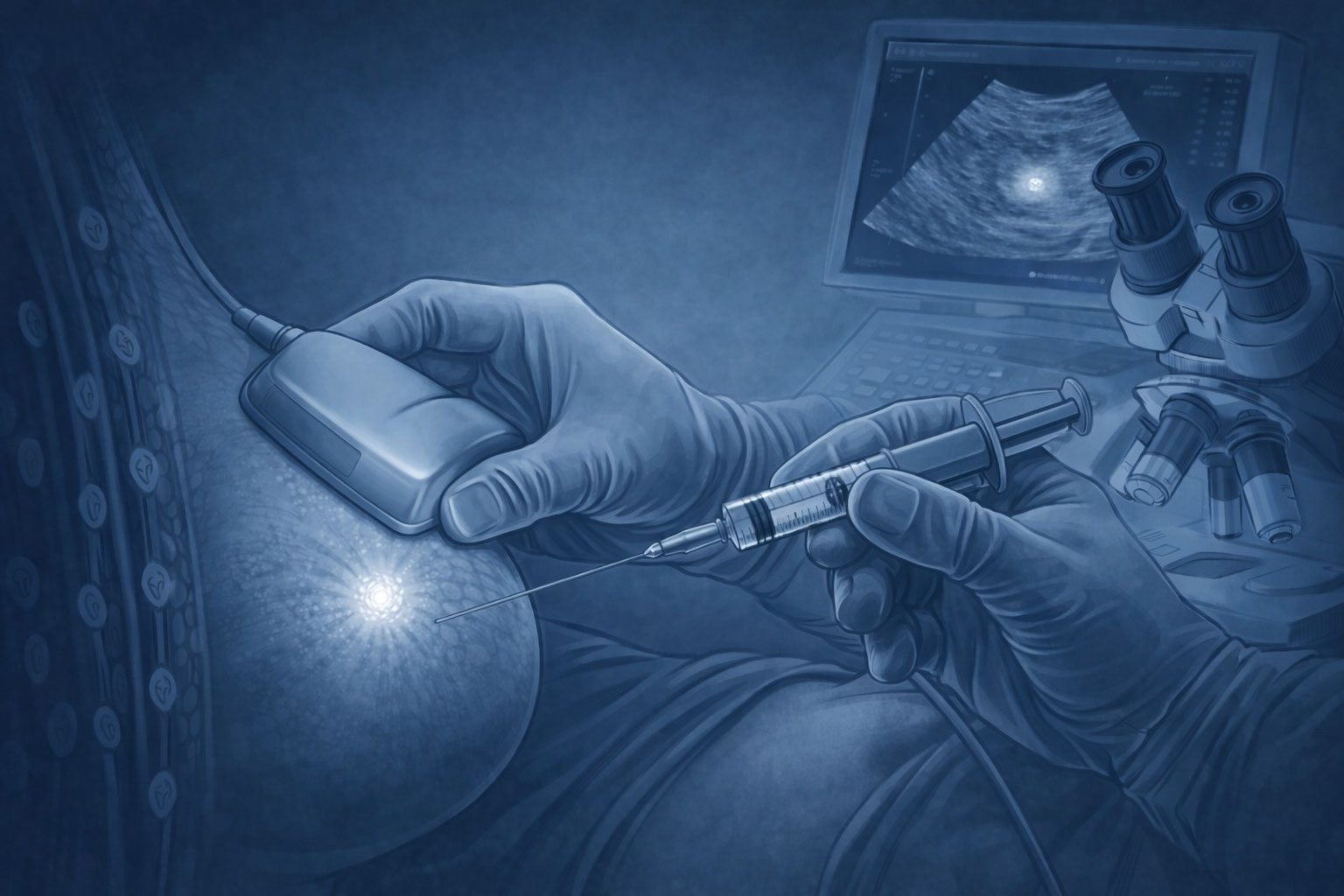
Breast biopsy is usually performed under ultrasound, mammogram, or MRI guidance, depending on the lump location.

Common types of breast biopsy:

  • Fine Needle Aspiration (FNAC) – very thin needle, quick test
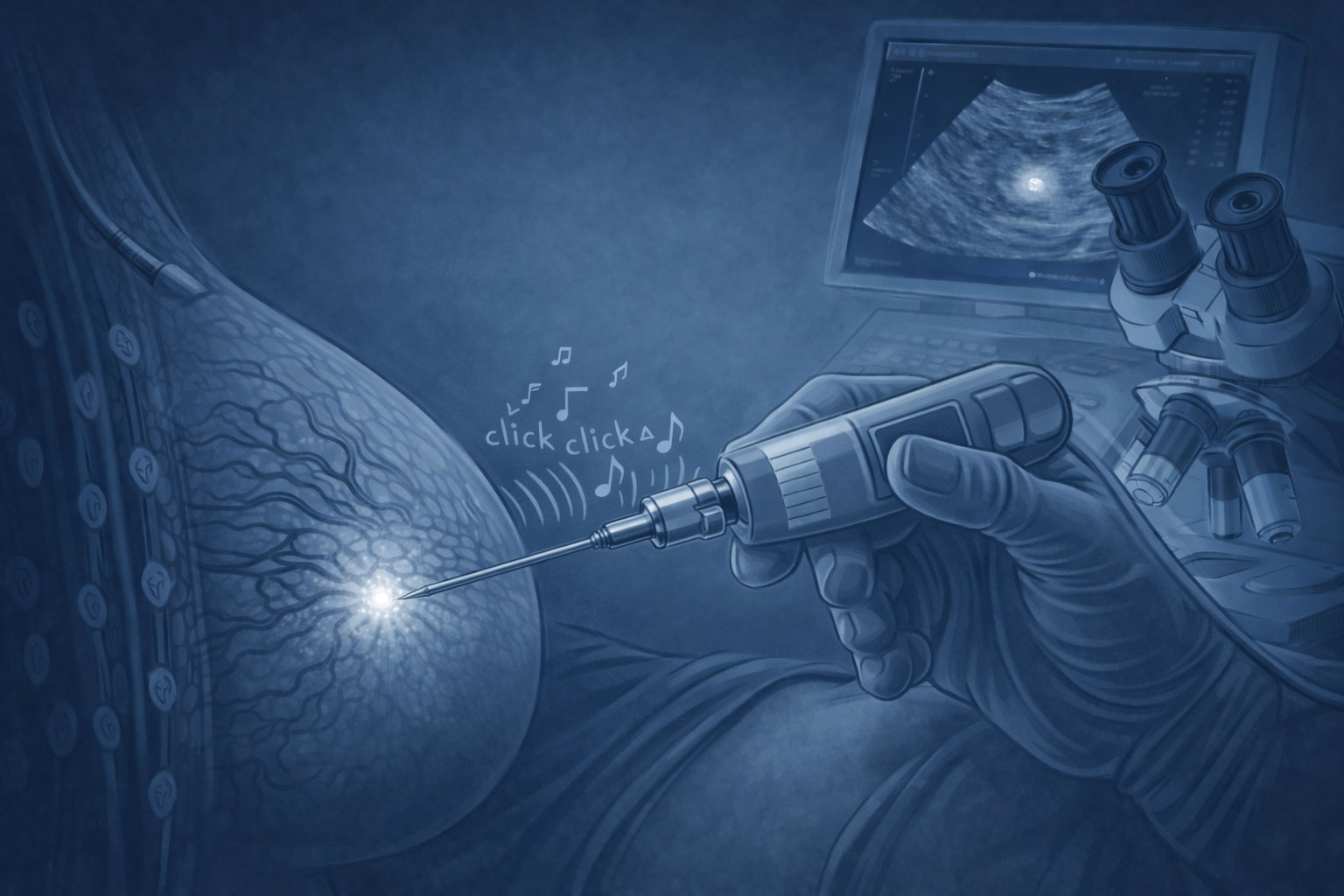
  • Core Needle Biopsy – slightly thicker needle, more tissue
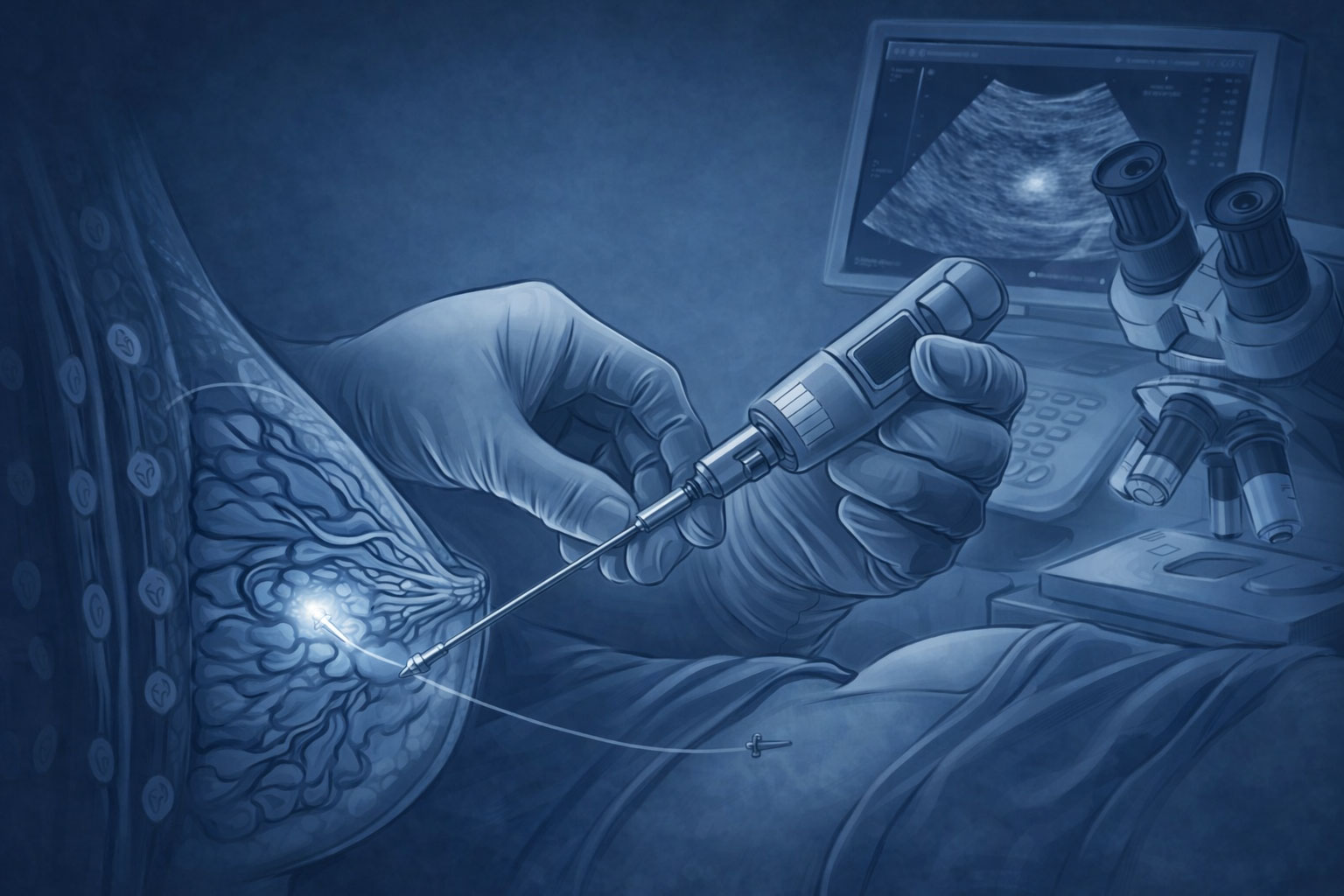
  • Vacuum Assisted Breast Biopsy (VABB) – can diagnose and sometimes remove the lump

Step-by-step procedure:

  • You lie comfortably on the examination table
  • The skin is cleaned and local anesthesia is given
  • A needle is guided into the lump using imaging
  • Tissue samples are taken
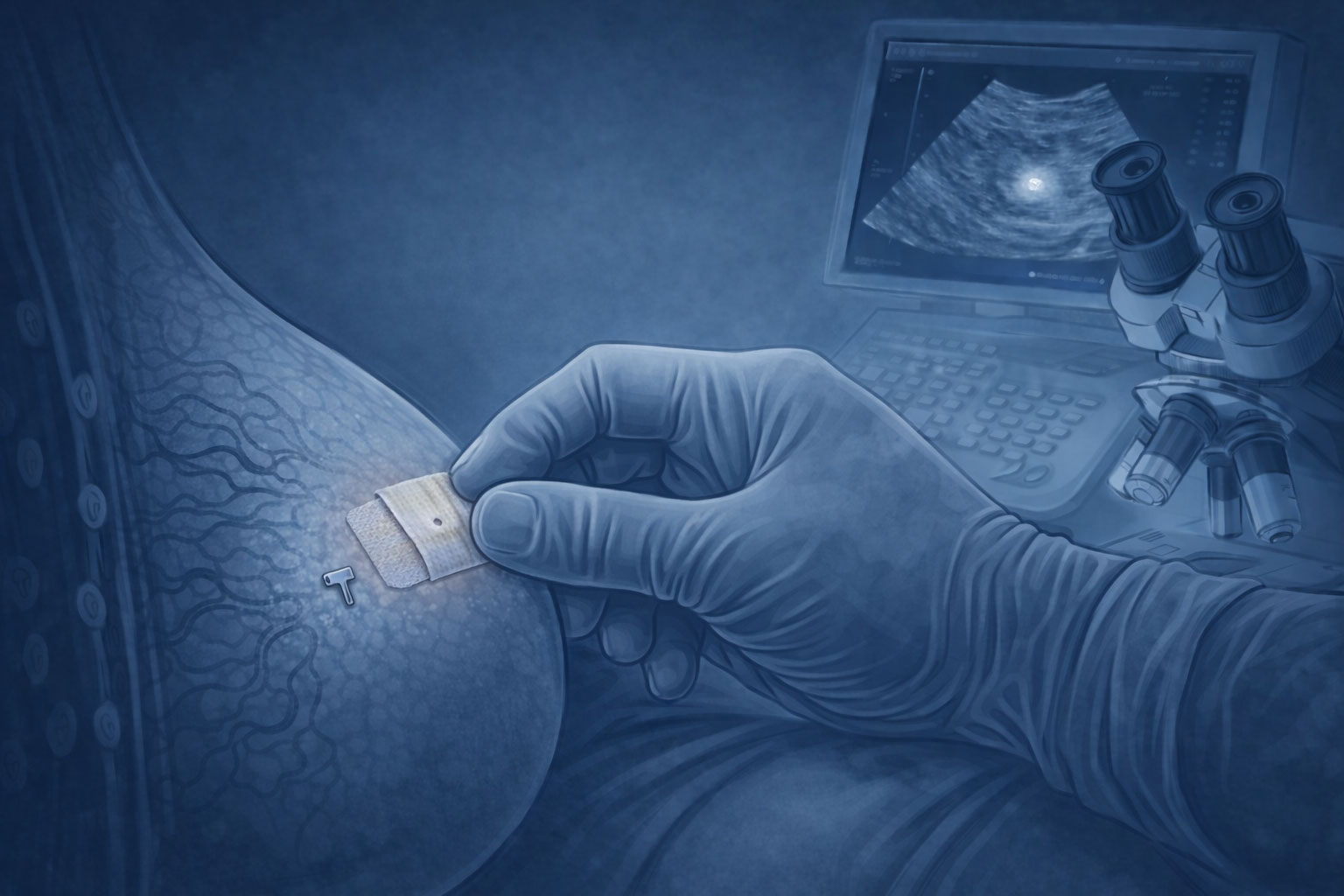
  • Pressure is applied and a small dressing is placed

What Are the Risks?

Breast biopsy is very safe when performed by trained specialists.
Possible risks with approximate incidence include:

  • Mild pain or tenderness – common (15–25%)
  • Bruising or swelling – common (10–20%)
  • Small blood collection (hematoma) – uncommon (5–10%)
  • Skin infection – rare (<1%)
  • Significant bleeding – very rare (<1%)

What Are the Alternatives?

Your treatment choices depend on:

  • Your symptoms and overall health
  • The size, location, and appearance of the spot or lesion
  • How likely it is to be a serious condition

Your clinician will help you decide the best approach.

Alternative 1: No Biopsy

  • Avoids undergoing a biopsy procedure
  • However, without a biopsy, doctors may not be able to confirm a diagnosis
  • This can lead to delay or incorrect treatment if the condition requires medical care

Alternative 2: Watchful Waiting (Imaging Follow-Up)

  • Regular monitoring with follow-up imaging tests such as ultrasound, CT, or MRI
  • Used to see whether the spot grows, shrinks, or changes over time
  • Avoids immediate invasive testing
  • Main drawback: serious conditions may go untreated if changes are detected late

Alternative 3: Surgical Removal

  • Involves surgical excision of the spot or lesion
  • Considered a more invasive option
  • Carries higher risks such as pain, infection, and complications
  • Requires a longer recovery period
  • Surgeons often prefer a biopsy diagnosis before surgery to guide treatment planning

Making the Right Choice

An image-guided biopsy offers a safe, minimally invasive way to obtain an accurate diagnosis, helping ensure timely and appropriate treatment while avoiding unnecessary surgery or delays.

📌 Breast biopsy is the most accurate and least invasive way to diagnose breast lumps.

What Happens After Your Procedure?

Recovery is usually quick and smooth.

After a breast biopsy:

  • You can go home the same day
  • Mild soreness or bruising may last 1–2 days
  • Normal activities resume within 24–48 hours
  • Avoid heavy lifting for a short time
  • Biopsy report is usually available within 2–5 days

Your doctor will explain the results and guide further care if needed.

Frequently Asked Questions (FAQs) – Breast Biopsy

A breast biopsy is a simple medical test in which a small sample of tissue is taken from a breast lump or abnormal area to check whether it is benign or cancerous.

A breast biopsy is done to:

  • Find out the cause of a breast lump
  • Rule out or confirm breast cancer
  • Avoid unnecessary surgery
  • Plan the correct treatment

Most patients experience minimal discomfort, as local anesthesia is used. Some mild soreness afterward is common but temporary.

Yes. Breast biopsy is a very safe and commonly performed procedure, with serious complications being rare.

The procedure usually takes 15–45 minutes and is done as a day-care (outpatient) procedure.

The needle used is very small, and most patients have little to no visible scar, especially with image-guided biopsy.

No. Most breast biopsies show benign (non-cancerous) conditions. The biopsy is done to be sure.

Biopsy results are usually available within 2–5 working days, depending on the laboratory.

Risks are uncommon and usually mild, such as temporary pain, bruising, or swelling. Serious problems like infection or bleeding are very rare (<1%).

No. Breast biopsy is an outpatient procedure, and you can go home the same day.

Some techniques, such as vacuum assisted breast biopsy, can remove small benign lumps completely. Other biopsy types are diagnostic only.

Common types include:

  • Fine Needle Aspiration (FNAC)
  • Core Needle Biopsy
  • Vacuum Assisted Breast Biopsy

The choice depends on lump size and location.

Yes. Most patients resume normal activities within 24–48 hours.

Yes. Image-guided breast biopsy is widely available in specialized breast and interventional radiology centers across India.

You should seek medical advice if:

  • You feel a new breast lump
  • A lump increases in size
  • A scan shows a suspicious finding
  • There is nipple discharge or skin change

Why Choose Image-Guided Breast Biopsy?

  • Accurate diagnosis

  • Minimally invasive

  • No major surgery

  • Quick recovery

  • Excellent cosmetic results

Take the Next Step With Confidence

If you have a breast lump or abnormal scan, don’t panic—and don’t delay.

A breast biopsy is the safest way to get clear answers and peace of mind.